How to Design a Logo (And the Best Courses to Learn Properly)
Most designers start their logo design journey the wrong way — opening Canva or Illustrator immediately and trying to “figure it out.” The result is always the same: a logo that looks like thousands of others, a client who asks for endless revisions, and a designer who wonders why no one takes their work seriously. This guide covers exactly how to design a logo the right way — with the 5-step process used by professional designers — plus the three best Udemy courses to teach you every skill you need in 2026.
Logo design is one of the highest-value graphic design skills you can learn in 2026. A single professionally delivered logo earns a beginner designer $50–$150 and an experienced designer $500–$2,000 or more. Furthermore, the skills involved — Adobe Illustrator, colour theory, typography, and design thinking — transfer directly into brand identity work, Etsy digital product creation, social media template design, and client branding packages. Consequently, the time you invest in learning logo design properly adds value across every design service you offer.
The 5-Step Logo Design Process Used by Professional Designers
Professional logo designers follow a clear, repeatable process on every project — regardless of budget, industry, or style. Understanding this process is the foundation of becoming a confident, paid designer. Below is each step explained in detail, followed by the Udemy courses that teach these skills most effectively.
Understand the Brief: Research Before You Design
Before opening any software, your most important task is to understand what the logo needs to communicate. A logo is a visual summary of a brand’s personality, values, and target audience — not just a nice-looking graphic. Therefore, every logo project must begin with a structured client questionnaire or briefing process.
Key questions to answer before sketching: Who is the target audience? What does the brand do and stand for? Which adjectives should the logo communicate — modern or traditional, playful or serious, premium or accessible? How do competitor logos look, and in what ways should this one stand apart? Where will the logo appear — digital only, print, signage, apparel?
- Write a one-paragraph brand description before touching any design tool
- Collect and analyse 5–10 competitor logos in the same industry
- Build a mood board with visual references, colours, and typography direction
- Define 3 key adjectives the finished logo must communicate to viewers
Sketch Multiple Concepts — On Paper First
The most common mistake beginners make is going directly to a computer screen. In contrast, professional designers sketch first — quickly, loosely, and in large quantities. At this stage the goal is to generate a wide range of ideas fast, not to produce polished artwork. Therefore, aim for 20–30 rough thumbnail sketches in a single session before evaluating any of them.
Sketching on paper forces you to focus on shape, proportion, and concept rather than being distracted by software tools, colours, or gradients. At this stage use a pencil and sketchbook or a basic iPad app. Do not add colour yet. Instead, focus purely on form — lettermarks, wordmarks, pictorial marks, abstract marks, and emblems are all valid approaches and exploring several different directions is essential before committing to one.
- 20–30 thumbnail sketches per session, loose and fast
- Group sketches into 3–4 distinct concept directions
- Select and develop only the 3 strongest directions for the client
- Never present a concept you would not be confident to deliver as a final logo
Build the Logo in Adobe Illustrator — Not Photoshop or Canva
Once you have selected your strongest sketch concepts, you build them digitally. The correct tool is Adobe Illustrator. This is not a preference — it is a technical requirement. Specifically, logos must be vector files so they can scale from a small business card to a large billboard without losing quality. By contrast, Photoshop files are pixel-based and become blurry when enlarged. Similarly, Canva cannot export the file formats professional printers, brand guidelines, and sign manufacturers require.
In Illustrator you will use the Pen Tool to trace and build custom shapes, the Shape Builder Tool to combine and subtract forms, and the Type Tool to set and adjust typography. Additionally, understanding the Pathfinder panel, alignment tools, artboards for logo variations, and the Golden Ratio grid system for proportional logo construction are all skills that separate professional output from amateur work. This is the stage where most designers need structured guidance the most — which is exactly what a quality Udemy logo design course provides.
- Always design in black first — colour decisions come after the form works
- Use the Pen Tool for custom shapes and hand-crafted letterforms
- Use the Shape Builder for complex geometric and abstract logo marks
- Set up artboards: primary logo, stacked version, icon only, reversed
- Use Golden Ratio grids for proportionally balanced, professional logo marks
Logo Design Mastery In Adobe Illustrator — Lindsay Marsh
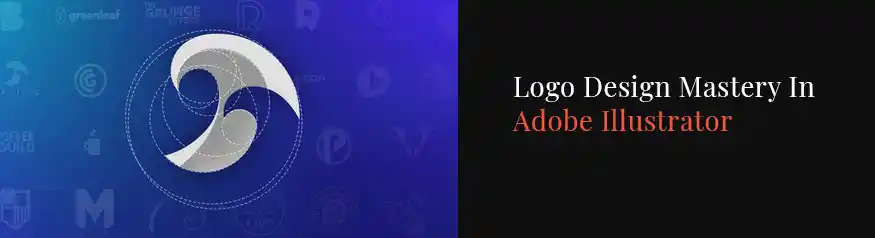
This is the Bestseller logo design course on Udemy — 5,658 reviews and a 4.6-star rating that has been maintained consistently across thousands of students. Lindsay Marsh is one of the most respected graphic design instructors on the platform, known for teaching design with both clarity and real commercial context. This course is not about Illustrator features in isolation; it is about learning the complete logo design process the way working designers actually use it.
The curriculum covers logo design theory and the creative process from the very beginning, including how to think like a designer, how to work with clients and understand their vision, and how to master the essential Adobe Illustrator tools used in professional logo creation. Furthermore, Lindsay’s teaching style is consistently praised by students for making complex concepts accessible without dumbing them down. The course is designed for all levels — absolute beginners can start from scratch, and intermediate designers find the workflow and client-process sections immediately applicable to real projects.
With 5,658+ reviews and Bestseller status on Udemy’s own June 2026 rankings, this course has been validated by more designers than any other logo design course on the platform. Importantly, a 6-hour course means you can complete the core material in a single focused weekend — and start applying the skills on real projects the following week. For graphic designers who want the most credible, well-tested logo design education available, this is the starting point.
Who Should Take This Course
Best for: All levels — beginners who want to learn logo design properly from scratch, and working designers who want a structured professional workflow to replace guesswork with a repeatable process.
- Learning the full logo design process — theory to client delivery
- Mastering Adobe Illustrator tools specifically for logo creation
- Understanding how to work with clients and handle design briefs
- Building a portfolio with real, commercially usable logo projects
- Designers who want the most-reviewed, most-trusted course available
Apply Colour and Typography with Purpose
Once your logo form works in black and white — and it must work without colour, because every strong logo does — it is time to apply colour and finalise the typography. Both of these decisions must be strategic, not decorative. Colour in logo design is grounded in colour psychology: red communicates energy, urgency, and passion; blue conveys trust, reliability, and professionalism; green signals growth, health, and sustainability; yellow suggests optimism and creativity; black communicates luxury, authority, and precision. Every colour choice must serve the brand’s positioning, not your personal aesthetic preference.
Similarly, typography follows the same logic. Script and handwritten fonts feel personal, creative, and artisanal. Geometric sans-serifs feel modern, clean, and digital. Serif fonts communicate tradition, authority, and trustworthiness. Slab serifs project confidence, boldness, and craftsmanship. The typeface — or the custom lettering you create — must reinforce the same adjectives you defined in Step 1. Consistency between form, colour, and type is what makes a logo feel coherent rather than assembled.
- Choose the primary colour based on brand psychology, not personal taste
- Limit the primary logo version to a maximum of 2 colours
- Confirm the logo works on both white and dark backgrounds before approval
- Select typography that matches the brand’s personality — no random font choices
- Outline all fonts before delivering any final files to clients
The Logo Design Mastery Course in Adobe Illustrator CC — HiveFlux
Rated the highest of any logo design course on Udemy at 4.8 stars, this course by HiveFlux Creative Academy is the most comprehensive logo design education available on the platform in 2026. Updated in December 2025, it covers the complete professional process across 13 hours of content — from logo ideology and colour psychology, through to advanced Adobe Illustrator techniques, the Golden Ratio and Fibonacci grid systems, full client project walkthroughs, mock-up presentations, and professional file delivery.
What separates this course from shorter alternatives is the depth of coverage on topics that most other courses skip entirely. The Golden Ratio and grid-based logo construction — used in the design of logos by Apple, Twitter, Pepsi, and countless other global brands — are covered in an extensive dedicated section with hands-on exercises. Additionally, two complete real-client logo projects are included: a food vending company identity and an architecture firm branding project, both developed from initial brief through to final presentation. This means you are not learning logo design in theory — you are learning it by doing exactly what a professional designer does on a paid project.
With 13 hours of focused, structured content and a 4.8-star rating maintained across hundreds of reviews, this is the course to choose when you want the most thorough grounding in logo design available online. Furthermore, because the course was updated in late 2025, the Illustrator interface shown in every lesson matches exactly what you see on screen today — there are no confusing outdated menus or renamed panels to navigate.
Who Should Take This Course
Best for: Designers who want the most complete and highest-rated logo design course available — covering every stage from concept to delivery, including advanced Golden Ratio techniques and real client project walkthroughs.
- Complete logo design education — brief, sketch, digital build, colour, delivery
- Golden Ratio and grid-based logo construction used by global brands
- Full real-client projects designed from scratch — food brand and architecture firm
- Professional file export, mock-up presentation, and client communication
- Designers who want the deepest, most thorough logo design course available
Present, Refine, and Deliver Professional Files
The final stage is the one most beginners underestimate — yet it is what determines whether a client comes back, recommends you, and pays your full rate. Professional logo presentation is not emailing a PNG file. It is presenting your concepts in high-quality mock-ups showing the logo on real-world applications — business cards, signage, packaging, digital screens, and apparel — so the client can visualise exactly what they are buying.
After client approval, professional delivery includes a complete file package: the original AI vector file, an EPS vector file, a PDF vector file for print, an SVG for web, and transparent-background PNG files at full resolution. Provide both the full-colour version and a single-colour (white/black) version of each. Additionally, a simple one-page brand style guide showing the logo, colour codes (HEX, RGB, CMYK), and font names immediately elevates your perceived professionalism and justifies higher rates.
- Present concepts in professional mock-ups, not isolated on white backgrounds
- Deliver: AI, EPS, PDF, SVG, and PNG (transparent) as a minimum file set
- Include full-colour, reversed white, and black versions of every logo variant
- Provide a one-page brand style guide with colour codes and font names
- Outline all fonts in Illustrator before packaging the final files
The Logo Design Expert Course in Adobe Illustrator CC
With 15,675 students enrolled and a 4.5-star rating, this course by Ukpoewole Enupe is one of the most widely taken logo design courses on Udemy — and for good reason. Updated in December 2025, it covers the complete professional logo design workflow across 13 hours: logo ideology, colour theory and psychology, a comprehensive Adobe Illustrator section, Fibonacci Golden Ratio and grid construction, the full creative process from client brief to final presentation, and professional file delivery and mock-ups.
What makes this course particularly valuable for designers who want to earn from their skills is the emphasis on client work. The creative process section alone spans over 4 hours — covering how to run a client kickoff call, analyse a brief, develop concept directions, create mood boards, build multiple logo concepts in Illustrator, present ideas professionally, and incorporate feedback. This is the complete commercial workflow, taught through a real food vending company project that a designer can follow from first conversation with the client to the final approved logo.
Furthermore, the course includes over 1,000 premium design resources as a free download for students — mock-ups, brushes, fonts, textures, and Photoshop actions — which means you have professional presentation assets ready from day one without additional expense. With 15,675 students and consistent positive reviews, this course has a proven track record of producing designers who go on to take paid work. Moreover, at Udemy’s regular sale price of $15–$20, the value is exceptional.
Who Should Take This Course
Best for: Designers who want a thorough freelance-focused course — one that teaches not just how to design logos, but how to work with clients, charge professionally, and deliver complete branding packages.
- Learning the complete client-facing logo design workflow
- Running kickoff calls, analysing briefs, and presenting logo concepts
- Golden Ratio and grid-based construction for professional logo marks
- Exporting correct file formats and building presentation mock-ups
- Freelance designers and Etsy sellers offering logo design services
Compare All 3 Logo Design Courses at a Glance
All three courses are verified from Udemy’s June 2026 rankings. Each serves a slightly different designer — use this table to choose the right one for your skill level and goal.
| Course | Instructor | Best For | Length | Rating |
|---|---|---|---|---|
| Logo Design Mastery Bestseller | Lindsay Marsh | All levels — most proven course | 6h | ⭐ 4.6 · 5,658 reviews |
| Logo Design Mastery Course (HiveFlux) | HiveFlux Creative Academy | Deep learning — Golden Ratio & full process | 13h | ⭐ 4.8 Highest Rated |
| Logo Design Expert Course | Ukpoewole Enupe | Freelance & client-focused workflow | 13h | ⭐ 4.5 · 15,675 students |
Why Self-Taught Logo Designers Plateau (And How a Course Fixes It)
Many graphic designers spend months watching free YouTube tutorials and still struggle to land paid logo work — or to charge what their time is worth. The reason is almost always the same: free content teaches individual techniques in isolation, not the connected workflow that produces professional results.
In reality, a client does not hire a designer who knows 50 Illustrator shortcuts. Instead, they hire a designer who can understand a brief, generate multiple distinct concepts, present them persuasively, and deliver the correct files in the correct formats without needing to be asked. That complete skill set — brief to delivery — is what a structured Udemy course teaches, and what no amount of individual YouTube tutorials fully replicates.
Furthermore, the fastest way to increase what you can charge is to understand why you made every design decision. When a client asks “why did you choose this font?” or “why this colour?” — a designer who can answer confidently and specifically communicates expertise. That expertise justifies higher rates, reduces revision requests, and builds the kind of client trust that generates referrals. All three courses above teach that level of intentional, strategic design thinking.
Start designing logos that clients actually pay for.
Lindsay Marsh’s Bestseller course is the most-reviewed logo design course on Udemy — trusted by thousands of designers worldwide. At Udemy’s regular sale price, it costs less than one hour of the freelance work it will help you land.
Start the Bestseller Logo Course on Udemy →More Design Learning at DivinеWorks
Logo design sits at the centre of a wider graphic design skill set. The following posts cover the tools most used alongside Illustrator in professional design and Etsy product work.
- Best Illustrator Courses on Udemy — the vector tool every logo designer needs to master
- Best Photoshop Courses on Udemy — photo editing, retouching, and logo mock-ups
- Graphic Design Tips for Beginners — the design principles that make logos work
- Best Graphic Design Books — recommended reading for designers who want depth
Frequently Asked Questions
Do I need to know Adobe Illustrator before starting a logo design course?
No — all three courses include a dedicated Adobe Illustrator section for complete beginners. Both the HiveFlux Mastery Course and the Expert Course include 2–3 hours of Illustrator fundamentals before any logo design work begins, covering the interface, core tools, shapes, colour, typography, and shortcuts. Lindsay Marsh’s Bestseller course also covers Illustrator from the perspective of logo-specific workflows. You do not need any prior software experience to start.
Which course is best — Lindsay Marsh, HiveFlux, or the Expert Course?
It depends on your goal. For the most trusted, most-reviewed course with a proven track record, choose Lindsay Marsh’s Bestseller — 5,658 reviews and consistent 4.6 stars means it has been validated by thousands of designers. If you want the most complete and highest-rated course with the deepest coverage of Golden Ratio and grid construction, choose the HiveFlux Mastery Course (4.8 stars). Those who prefer a freelance-focused workflow with an emphasis on client communication and a large student community should choose the Expert Course (15,675 students). All three are excellent — some designers complete more than one.
Software, Timeline and Cost Questions
Can I design logos in Canva instead of Adobe Illustrator?
Canva can produce simple logo-style graphics, but it cannot deliver the file formats professional logo work requires. Specifically, Canva does not export true vector files (AI, EPS, SVG with full edit access) that printers, brand guidelines, and sign manufacturers need. Furthermore, Canva logos use platform elements and fonts that are not fully unique — meaning your designs are limited to what the platform provides. For professional logo design and client work, Adobe Illustrator is the industry standard tool, and all three courses above teach it specifically for logo creation.
How long does it take to learn logo design from one of these courses?
With consistent practice, most beginners can take on paid logo projects within 4–6 weeks of starting a structured course. Lindsay Marsh’s course is 6 hours — at one hour per day that is under two weeks of watching. The HiveFlux and Expert courses are 13 hours each — roughly 2–3 weeks at the same pace. The real acceleration comes from applying each lesson immediately in your own projects. Designers who practice between lessons progress significantly faster than those who only watch the videos. The portfolio you build while taking the course is also what you show potential clients.
What software do I need, and how much does it cost?
The primary tool is Adobe Illustrator, available as part of Adobe Creative Cloud. A single-app Illustrator subscription costs approximately $20–$22 per month, or you can access it as part of the full Creative Cloud plan. Adobe offers a 7-day free trial — enough time to begin any of the courses above and progress significantly through the content. For mock-up presentations, Adobe Photoshop is also useful, and both the HiveFlux and Expert courses include sections on using Photoshop mock-ups to present completed logos professionally.